


Today’s episode had mirth, merriment, Curb Your Enthusiasm references, sports talk, and politics!
Here’s Danielle with today’s Democracy-ish write-up!
Politics is rarely contained within the walls of legislative chambers. Andrew Breitbart famously asserted that “politics is downstream from culture,” but modern political discourse demonstrates that culture and politics exist in a continuous, reflective feedback loop. When national anxiety mounts and institutional trust wavers, cultural arenas—particularly professional sports—become the primary stage where political clashes play out.
From hostile fan behavior in sports arenas to synchronized social media disinformation campaigns that collapse under basic fact-checking, cultural controversies are not isolated incidents. They serve as diagnostic tools for understanding modern political power structures, systemic hypocrisy, and the mechanics of political rhetoric.
1. Sports as a Microcosm of Cultural Hegemony
When tennis icon Billie Jean King observed in the 1970s that sports serve as a microcosm of society, she identified an enduring reality: athletic venues reflect a culture’s structural dynamics, social tensions, and power struggles. Because athletic competition commands widespread, simultaneous public attention, sports arenas function as prime territory for political symbolism and social friction.
The Intersection of Race, Gender, and Spectator Hostility
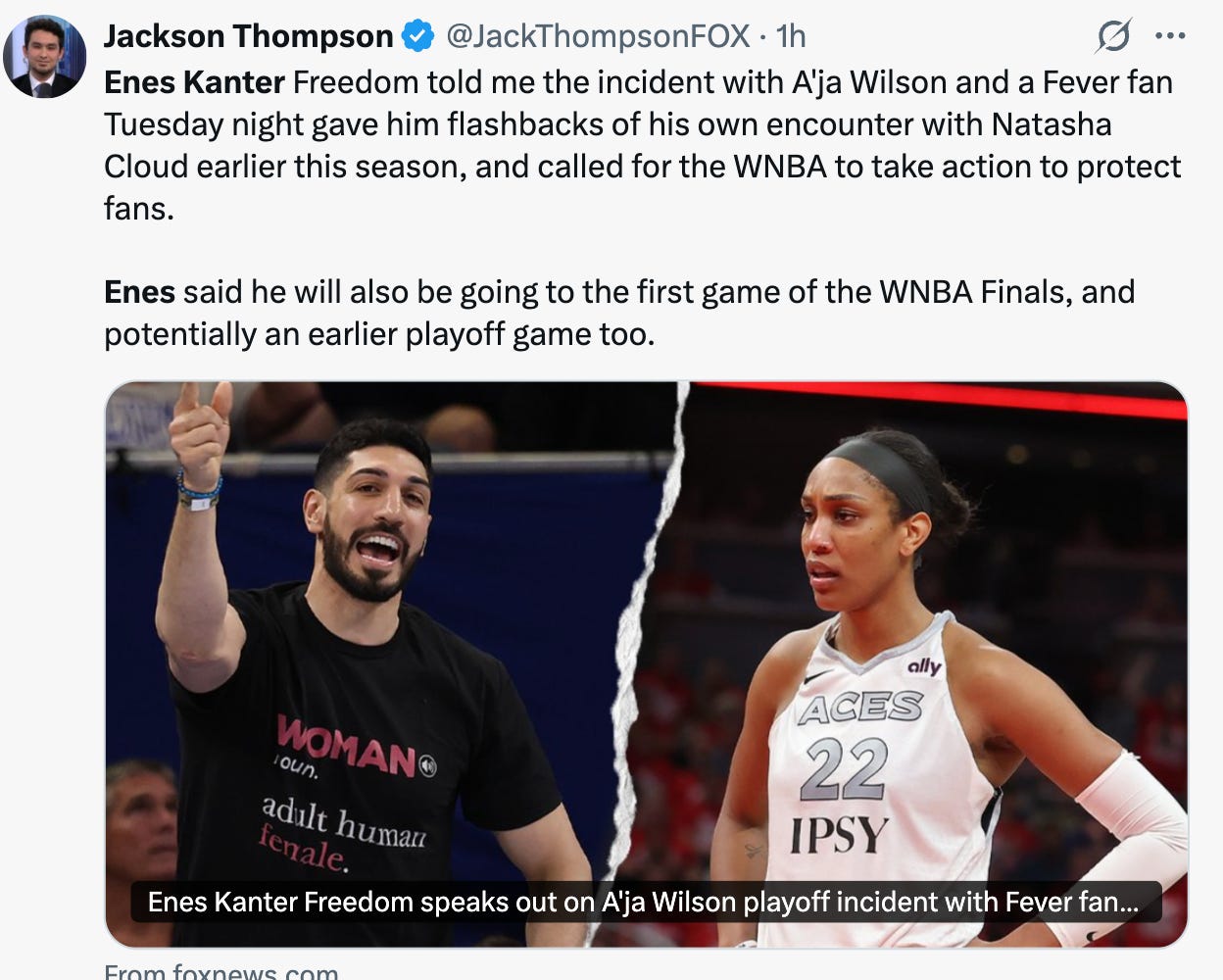
The Women’s National Basketball Association (WNBA) occupies a unique position in modern American culture. As a league where a substantial percentage of athletes are Black and LGBTQ+, the WNBA naturally stands as an inclusive space. However, as public visibility and media valuations for women’s basketball have expanded, the league has increasingly become a target for broader ideological conflicts.
Recent incidents across the league demonstrate how spectator hostility mirrors political polarization:
Boundary-Testing Conduct: Athletes face escalations in personal harassment, racial slurs, and physical intimidation from aggressive fans.
The Weaponization of Player Rivalries: Natural collegiate rivalries—such as the high-profile matchup between Angel Reese and Caitlin Clark—are routinely flattened by external media commentators into reductive racial narratives.
Targeted Workplace Harassment: Beyond verbal abuse, arenas have witnessed acts specifically calculated to degrade players, such as spectators throwing sex toys onto the court. In standard employment settings, such actions are prosecuted as unlawful workplace sexual harassment; within the stadium, they are too often dismissed as mere spectator antics.
Institutional Response and Escalation Dynamics
When athletic organizations and venue management fail to impose strict accountability on disruptive behavior, they establish a dangerous precedent. Restoring a disruptive fan to their seat after a confrontation—under the claim that no arena policy was broken—signals that high-profile athletes are expected to endure targeted hostility as part of their employment.
When systemic harassment yields only mild administrative reprimands, boundary-testing escalates. Unchecked rhetoric in the stands mirrors unchecked rhetoric in public policy; both rely on institutional leniency to expand their scope.
2. Manufactured Outrage and Political Distraction
Culture-war strategies rely heavily on high-visibility targets to keep public attention fixed on symbolic grievances rather than legislative performance or substantive policy debates.
Staged Provocations in Public Spaces
The deployment of political stunts inside sports venues—such as commentators attending women’s games in ideological attire or publicly staging application attempts for leagues in which they do not play—serves a specific media objective. These actions are designed to manufacture viral clips, generate outrage-driven engagement, and enforce rigid cultural binaries.
Rather than engaging with the actual athletic performance or economic growth of the league, these stunts use professional athletes as involuntary props for political content creation.
Silent Complicity vs. Platform Responsibility
In highly polarized media environments, silence from public figures is often interpreted as strategic alignment. High-profile figures who remain quiet while aggressive fan bases target their peers effectively allow their platforms to be co-opted.
When athletes and public figures decline to draw boundaries against bigotry among their supporters, they preserve brand neutrality at the expense of colleagues who endure targeted abuse.
3. The Collapse of Scripted Political Narratives
The same reliance on pre-packaged outrage that fuels cultural disputes often backfires during formal government proceedings. Modern political operations depend heavily on synchronized messaging across legislative committees, digital influencers, and partisan media outlets. When reality fails to align with the pre-scripted narrative, the political machinery collapses into absurdity.
A Case Study in Legislative Misdirection
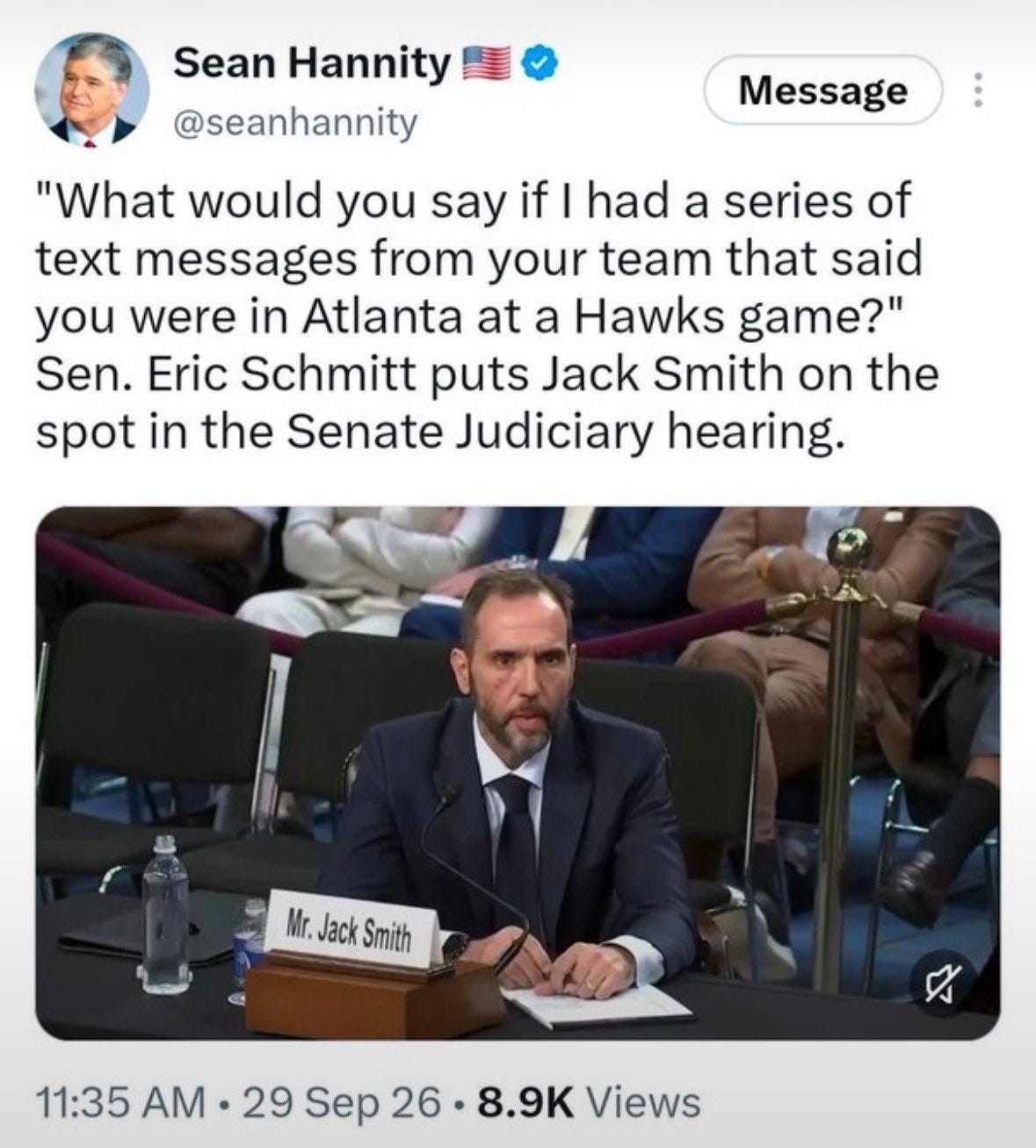
During congressional oversight hearings, committee members frequently attempt to construct dramatic “gotcha” moments intended for social media distribution. A prime example occurred when Senate lawmakers attempted to link a federal prosecutor to prosecutorial misconduct by alleging a secret meeting at an Atlanta Hawks basketball game with a local district attorney.
The lawmaker had confused the Atlanta Hawks (an NBA team in Georgia) with the Iowa Hawkeyes (a women’s collegiate team playing a match in Maryland). A conspiracy theory built entirely on geographic and athletic confusion evaporated instantly under minimal factual scrutiny.
The Mechanics of Algorithmic Troll Farms
The collapse of the hearing narrative exposed the automated nature of modern partisan messaging:
Pre-Scheduled Content Deployment: Partisan media influencers published pre-written posts praising the lawmaker for “demolishing” the witness before the line of questioning had actually concluded.
Algorithmic Echo Chambers: Thousands of automated and partisan accounts amplified the staged victory across social media platforms simultaneously.
Silent Deletion Without Correction: Once the factual error was exposed on live television, influencers quietly deleted their posts without issuing retractions or apologies.
This sequence highlights the fundamental fragility of outrage-driven media strategies. Because these operations prioritize speed and emotional resonance over factual accuracy, they are exceptionally vulnerable to sudden, embarrassing exposure when confronted with verified evidence.
4. Projection, Suppression, and Institutional Hypocrisy
The escalation of hostile cultural rhetoric is deeply tied to internal party dynamics and personal hypocrisy. Political movements that demand absolute adherence to traditional social hierarchies often exhibit severe internal contradictions.
The Dynamics of Political Projection
In political psychology, extreme public opposition to specific personal behaviors or identities often correlates with private deviation from those same enforced norms. Uncompromising public moralizing frequently serves as a shield against personal scrutiny:
Enforced Binary Norms: Political movements that aggressively champion rigid social structures create environments where personal divergence is treated as a betrayal.
The Performance of Dominance: Individuals who feel constrained by strict ideological demands often channel that suppression into hostile behavior toward marginalized groups—particularly trans individuals, women, and minority public figures—who operate openly outside those artificial constraints.
Institutional Cover-Ups: Systemic abuse within strictly hierarchical organizations (such as religious institutions or insular political networks) is frequently concealed to preserve the illusion of moral superiority, while external groups are relentlessly targeted.
Self-Inflicted Fractures in Modern Conservatism
When political movements prioritize performance over truth, their internal contradictions eventually breach the surface. Whether through personal scandals, public reversals under oath, or catastrophic misstatements during legislative hearings, the reliance on manufactured outrage ultimately undermines institutional credibility.
The urge to enforce control over culture, sports, and private life is not a sign of political strength, but a symptom of institutional anxiety. When political operations depend entirely on script discipline, troll farms, and cultural scapegoats, a single moment of objective reality—a simple fact-check on live television—is all it takes to shatter the narrative.
***Because I’m a terrible capitalist, here’s a great 25% off discount for new paid subscribers. It’ll only be about $3.75/month or $38/year.
There are no paywalls, and The Left Hook continues depending on the kindness of our readers
Thank you Uncomfortable Truth by Monica, Deuce Davis, Cat: Poli-Psych, Amy Gabrielle, Cash Flow Collective, and many others for tuning into my live video with Danielle Moodie! Join me for my next live video in the app.


